Can Mini Pill Work if Not Breastfeeding After 6 Months Baby Birth Control
Across many industries, colloquial terms for products and inventions accept a existent staying power. You've probably heard someone refer to a tissue past saying "Kleenex," for example. Similarly, folks use the brand proper name Band-Aid as a stand-in for referring to bandages.
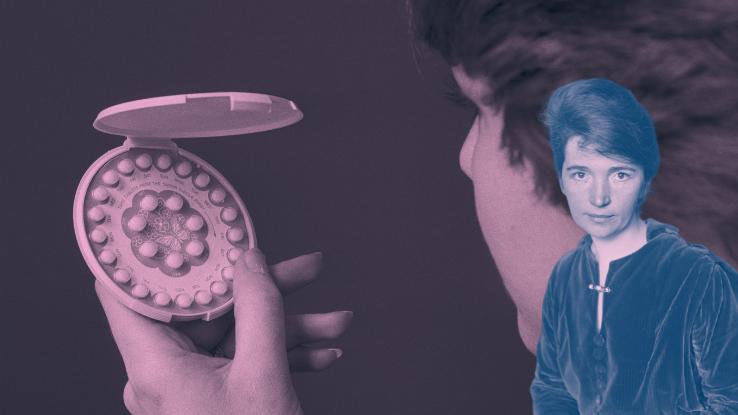
Another common colloquialism? Calling nascency command pills just "the pill." Taken orally, these hormonal contraceptives are synonymous with the term — even though many medications come up in capsule (or pill) form. Even so, if you lot say "the pill," people across generations will immediately know that you're referring to birth control.
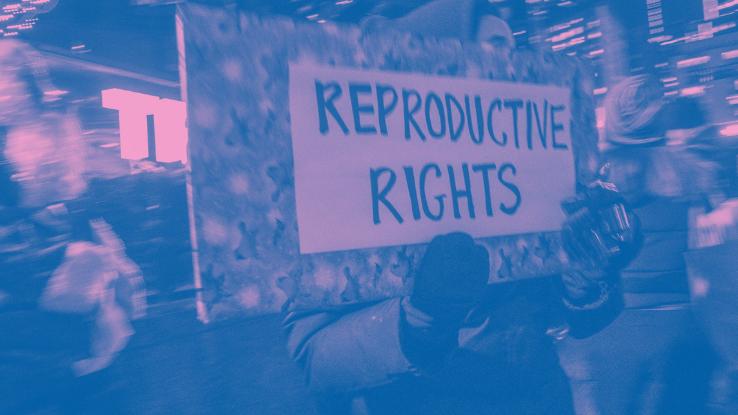
Today, a person'south contraceptive choices extend beyond the pill. But the history of the ubiquitous phrase — and the medication itself — figure and so prominently into the history of reproductive rights, health care, sexual health, and bodily autonomy. With this in heed, permit'due south delve into the history of birth control in the Usa, and how this history is still deeply tied into the fight for equal rights today.
By definition, birth command is any action or medication that help regulate when (and if) cisgender women, intersex people, and individuals assigned female at birth volition go pregnant. Although the pill might be ane of the more mutual forms of contraceptive medication, intrauterine devices, implants, condoms, diaphragms, and methods of tracking ovulation are all forms of birth control.
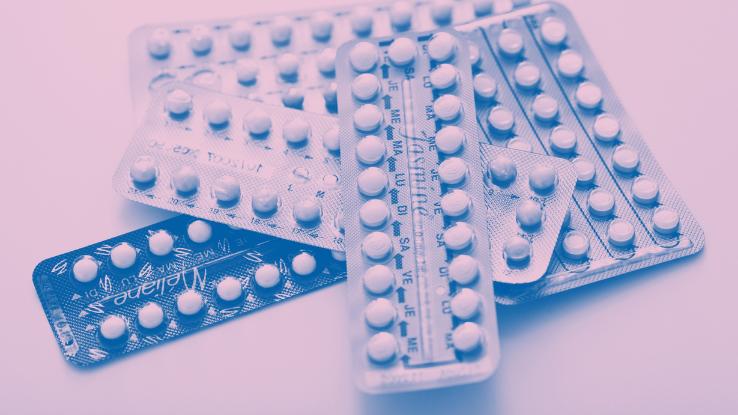
Of form, the pill remains one of the more attainable, condom and effective methods of nascence control. Not to mention, the pill left an enduring mark on American society when the revolutionary medication was first introduced. Prior to the pill, birth control methods were cumbersome and often unreliable. The pill, on the other hand, was discreet, like shooting fish in a barrel to use, and less intrusive. According to the AMA Periodical of Ethics, the Nutrient & Drug Administration (FDA) approved the kickoff oral contraceptive in 1960, and, inside ii years, 1.ii million American women were using the pill.
And so, what's in this revolutionary medication? Essentially, the pill is an ingestible course of progestin and estrogen. These hormones mimic pregnancy and play a trick on the body into initiating all of the processes that make it more difficult to get pregnant. For example, more than mucus forms on the walls of the cervix, which, in turn, prevents sperm from traveling upwards the birth canal, and the walls of the uterus become thinner. Most significantly, someone taking the pill volition terminate ovulating, so there won't be any eggs to fertilize. Needless to say, the pill helped make pregnancy more than of a pick than an inevitability, allowing people to accept a much larger degree of command over their reproductive health, bodies, sexual wellness, and futures.
History of Nascency Control in the U.s.a.
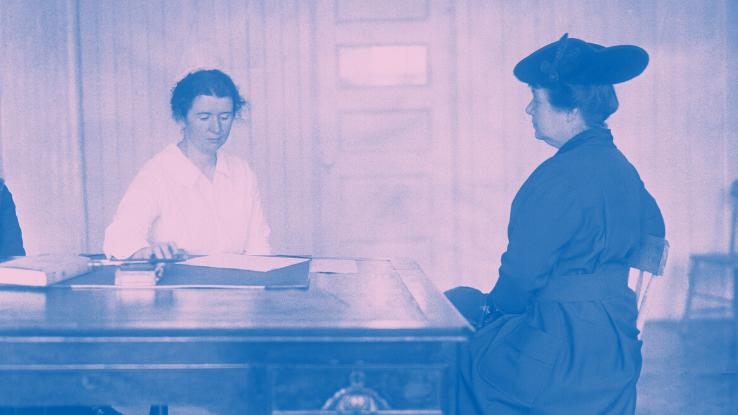
In 1916, Margaret Sanger opened one of the primeval-known nativity control clinics in America. Due to the Comstock Act, which deemed nascency control "obscene," the clinic could non write, publish, or distribute whatsoever information about birth command. Since virtually all methods of birth control were illegal at the time, Sanger and her colleagues were as well unable to perform or prescribe any methods of birth command. Rather, the dispensary served every bit a source of information, assuasive people — primarily women — to learn of prophylactic and effectives means of taking control of their reproductive wellness.
Decades afterwards opening her first dispensary, Sanger met an endocrinologist, Gregory Pincus, who believed in her idea to develop a birth control pill. Testing the pill was mayhap even harder than creating the pill; there was enough of legal reddish record — not to mention an ingrained, societal (and misogynistic) fear surrounding the reproductive organisation and the sexual health of women. After receiving a generous donation from Katherine McCormick, a wealthy biologist and activist, Pincus and Sanger ran a larger clinical trial in Puerto Rico, where laws weren't as restrictive.
Eventually, the FDA approved the pill in 1957, but it was only to be used in the treatment of menstrual disorders experienced by married women. In 1960, the FDA fully approved nascence control as a contraceptive. Despite the expansion of the FDA approval, there were still millions of people who did not have access to nascence control. In 1965, the Supreme Court ruled that states were not allowed to ban birth command pills, simply it wasn't until 1972 that the Supreme Court ruled that unmarried women had the right to take birth control pills. In many ways, referring to the medication as "the pill" was born out of a necessity — to be discreet and avoid any stigma.
In the early decades of the widespread use of oral contraceptives, doctors and patients who were reporting serious side furnishings, like claret clots and strokes, were ignored, and this led to a campaign confronting nascence control from the medical community. In that location was too a concern surrounding where birth control pills were being distributed. "Sanger's stated mission was to empower women to make their own reproductive choices," Fourth dimension reports. "She did focus her efforts on minority communities, because that was where, due to poverty and limited access to health care, women were especially vulnerable to the effects of unplanned pregnancy." Nevertheless, these efforts, and Sanger's legacy, accept been tainted by her well-documented comments in back up of eugenics, a now-discredited, discriminatory movement mired in white supremacist behavior.
How Nativity Control Relates to Equality
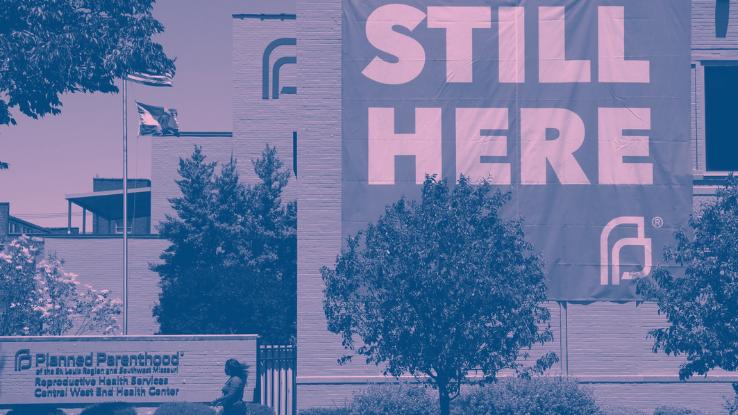
Using the pill is far less controversial today than it was in decades past, simply birth control — and other facets of reproductive freedom — continues to be met with opposition in the U.S. For example, many conservative Christian sects object to birth control, believing that information technology goes confronting God's will. Politically, this has long been a stance that correct-fly politicians and supporters take on as well, often taking aim against Planned Parenthood, reproductive rights, access to ballgame and contraception, and more than.
Why? Because birth control relates to sexual health, these groups of people act as though the pill is a matter of morality. That is, their religious or political beliefs can actually interfere with wellness care. Fifty-fifty at present, religious and not-profit employers tin can offer health insurance plans that exclude coverage of nascency command if washed so because of a religious or moral belief.
On the other paw, the Affordable Care Human activity states that all health insurance plans offered in the Health Insurance Marketplace must encompass FDA-approved methods of birth control. That'due south but 1 footstep toward providing admission to reproductive health care. For example, nativity control is ane of the safest medications on the marketplace today, only it tin can't be bought over the counter (OTC); many groups, such as Free the Pill, are fighting to make OTC nascence control a reality in the U.Southward.
Of course, others are hoping to make the pill free of charge to further back up gender equity and equality efforts — in addition to making the pill more accessible to all people, regardless of socioeconomic class, race or gender. "Despite meaning strides in women's reproductive health, disparities in access and outcomes remain, peculiarly for racial–ethnic minorities in the The states," a 2020 study reports. "Information suggest that the disproportionate risk for women of color for reproductive health access and outcomes expand beyond private-level risks and include social and structural factors, such as fewer neighborhood health services, less insurance coverage, decreased access to educational and economic attainment, and fifty-fifty practitioner-level factors such as racial bias and stereotyping." Needless to say, the pill existence complimentary of accuse — and more than hands accessible — could go a long way in remedying these racial disparities.
People who support access to nascency control — and fight for reproductive justice — understand that without birth control women and other people at take chances for pregnancy face severe disadvantages across many facets of life. For 1, an unplanned or unwanted pregnancy can bear upon ane's ability to work or build a career. In other instances, someone who may become meaning might not be physically, emotionally or mentally healthy enough, or have access to the resource, to accept and heighten a kid safely. In fact, over 800 people die during pregnancy always day; millions are saved from this fate due to birth control access.
Access to contraception allows people to programme their lives by affording them more than opportunity; that is, instead of being handed a decision, people can choose. The pill may be tiny, simply, undoubtedly, it gives millions of people a huge boost of support by allowing them to programme for parenthood if they want to embark on that path.
Resource Links:
- "History of Oral Contraception" via AMA Journal of Ethics
- "Birth Command" via Clinical Methods: The History, Physical, and Laboratory Examinations | U.South. National Library of Medicine
- "New Study Confirms What Many Have Long Believed to be True: Women Utilise Contraception to Amend Achieve Their Life Goals" via Guttmacher Found
- "5 Ways Family Planning Is Crucial to Gender Equality" via Global Citizen
- "Birth Control Benefits" via HealthCare.gov
- "History of Yaz" via Drug Law Centre
- "What Margaret Sanger Really Said About Eugenics and Race" via Time
- "Contraception: traditional and religious attitudes" via NIH | National Library of Medicine
- "The Side Effects of the Pill" via WGBH, PBS/KQED
- Estelle T. Griswold et al. Appellants five. State of Connecticut — Case Data via Legal Information Institute | Cornell Law School, Cornell University
- "Katherine McCormick" (biographical information) via Iowa Land University
- "Comstock Act of 1873 (1873)" via Middle Tennessee State Academy
- "First American Birth Control Clinic (The Brownsville Clinic), 1916" via The Embryo Project | National Science Foundation, Arizona Country University, Center for Biology and Society, the Max Planck Institute for the History of Scientific discipline in Berlin, and the MBL WHOI Library
- "Nascence Command: The Pill" via Cleveland Clinic
- "Birth Command Pill" via Planned Parenthood
- "Half a century of the oral contraceptive pill" via CFP – MFC, The College of Family unit Physicians of Canada | U.S. National Library of Medicine
- Free the Pill | freethepill.org
- "Racial and Ethnic Disparities in Reproductive Health Services and Outcomes, 2020" via Obstetrics and Gynecology, Lippincott, Williams & Wilkins | U.South. National Library of Medicine
Source: https://www.symptomfind.com/health/pill-birth-control-history?utm_content=params%3Ao%3D740013%26ad%3DdirN%26qo%3DserpIndex
0 Response to "Can Mini Pill Work if Not Breastfeeding After 6 Months Baby Birth Control"
Post a Comment